13 Reasons Why
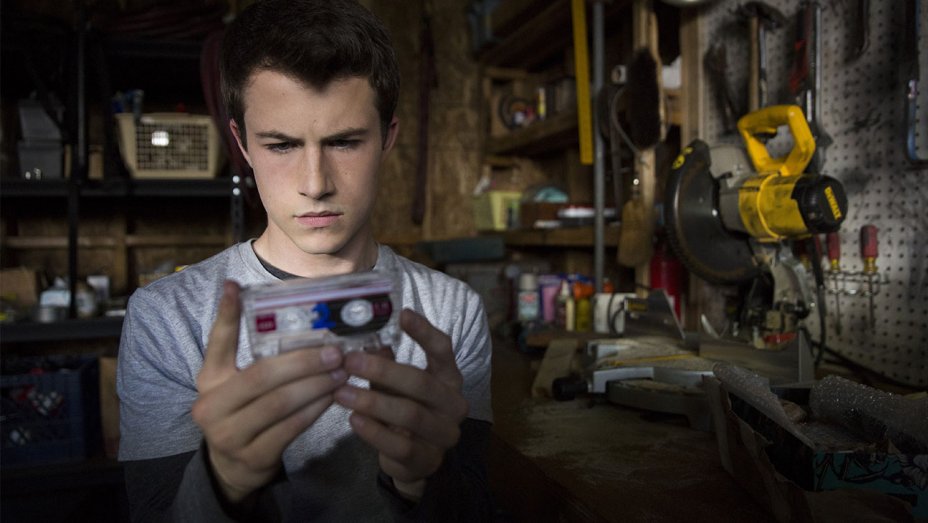
It’s 1.30am and I’ve just finished watching the controversial Netflix original 13 Reasons Why, having binged the last 5 episodes in one sitting. Adapted from the 2007 YA novel of the same name by Jay Asher, it documents via the use of tape recordings the events leading up to, and aftermath of, high school student Hannah Baker’s suicide. The tapes contain 13 reasons for her suicide – specifically 13 people, their actions and the consequences said actions have had that Hannah feel directly contribute towards her decision to take her own life. The show begins with these tapes being left on the porch of unassuming, 17-year-old Clay Jenson, and we, along with Clay, slowly and painfully begin to piece together the mystery.
Having started the show a good couple of weeks ago, it was only as I neared the end of the series that I felt the familiar tug of that uniquely modern affliction we associate with Netflix shows – binge watching – which speaks volumes not only about the lack of pacing and character development, but also the fact that the show was way too long; during the middle episodes I was routinely checking to see how much of the red bar had passed and feeling fraught when it would inevitably show that I was only 10 minutes in. By making the show so long, early episodes in particular lacked any real agency or character engagement, the main culprit for lack of engagement being Hannah – the supposed protagonist. Disappointingly, I found her to be infuriatingly one dimensional and irritating. By going to such great lengths to portray Clay as the shows wholesome white knight, they completely sacrificed Hannah’s likability. This means that by the time we reach episode 10 and Hannah tries to confide in Clay about the tragic death of another student, even our resident nice guy ends up snapping, dismissing her with, “Every drama has to be your drama or it doesn’t count, and somehow this is all about you – it’s incredible”, and I doubt a single viewer blamed him. Rather than being portrayed as a victim, she comes across as whiny and insincere; I shudder to think how many young people watching the show dismissed her as one of those feminist girls who needs to chill out and take a compliment – not what you want from a show that is supposed to be giving a voice to the voiceless. Now, I understand that this largely comes down to the fact that in order to highlight the truly galling misogyny that young girls face everyday, be it constant objectification, dismissive behaviour or outright rape, you have to actually show such behaviour. But by not focusing on Hannah as more than just the girl who committed suicide, writers have only given the audience one lens in which to view her, that of the boys she is repeatedly rebuffing. Sadly, this means that you bizarrely feel more sympathy for poor old Clay – and his descent into a nervous breakdown – than you do for the girl who felt her only option was to cease to exist. Hannah is the victim here, yet it feels like writers were so involved in unravelling the tapes, and fleshing out her co-stars, that they forgot to give Hannah the three dimensional personality she so desperately needs, and most importantly, deserves.
Going back to watchability, 13 Reasons mirrors Hannah, using a breadcrumb trail; each episode dropping just enough to keep you interested – but I’ll warn you now, the breadcrumbs are minute. As I touched on earlier, if you can forgive the initial faltering in pace and hold on past the first few episodes, I promise that the breadcrumbs slowly – and I mean slowly – evolve into more substantial morsels. However, given the slow start, it’s worth acknowledging that by the time we reach Clay’s tape, the audience are just as anxious and clammy as the man himself. What secrets were about to rear their ugly heads to warrant his place on the tapes amongst the rag tag bunch of bullies, rapists and perverts … what had our titular hero done… ? The episode masterfully builds a growing sense of dread as Hannah narrates the series of events that lead up to Clay laying her down on a bed, and it’s truly heartbreaking to watch the camera close in on Clay’s anguished face as he listens, waiting… “Clay? Helmet…? Your name does not belong on this list […] because you aren’t every other guy, you’re different. You’re good and kind and decent, and I didn’t deserve to be with someone like you […] I would’ve ruined you.”. Granted, both Clay and the audience collectively sigh with bittersweet relief… but for his only misdeed to be that the poor lamb was too pure, too nice – I appreciate that the writers are confined somewhat by the original book – but come on. Seriously? Clay, understandably distraught, suddenly imagines himself and Hannah, wedding bands on fingers, smiling, happy and normal. By refusing to budge regarding Clay as the white knight who couldn’t save her, the writers sadly seal Hannah’s fate as appearing heartless and vindictive – which when her school is populated with such vile individuals, is quite a feat. Why has she put this boy through the ringer when he was apparently so “…good and kind and decent”? This is her one dimensional personality shining through – Hannah is merely a tool in this story, not the protagonist.
Given the alarming rise of mental health issues in schools – and indeed society as a whole – this show feels necessary, albeit gratuitous in parts. Now, I’m not going to delve too deeply into the ethics of what impact this could potentially have on vulnerable teens, but will admit that for all of the good the show does in highlighting the toxic, misogynistic atmosphere in the education system, it does make Hannah’s decision to leave a retro suicide note via a breadcrumb trail of tapes seem quirky enough to be interpreted as cool by those looking for an escape. Placing the same kind of rose-tinted nostalgia for the 80s that shows like Stranger Things successfully employ, seems more than a little trite when applied to a young girl desperately trying and failing to keep her head above water; I can certainly see why suicide prevention groups are nervous. However, any medium that targets the teen demographic and depicts suicide is always going to run the risk of triggering vulnerable individuals. I would argue that any notion of Hannah’s suicide seeming whimsical is immediately voided when we watch her graphically slit her wrists and the life fade from her panic-stricken eyes. It was incredibly difficult to watch, but it needed to be difficult. Far from giving teens glorified images of peacefully slipping away and those who tormented you getting their comeuppance, it provided the stark reality. You die. It is frightening. It is painful. It is lonely. Yes, by having Hannah narrate the contents of the tapes to present day Clay, the show creates the illusion of an intimate conversation between the two, where she is somehow living on through her tapes; however, by waiting till the very end of the final episode to show her death, and subsequently showing Clay driving off into the sunset with new friends, it creates a cruel sense of finality. After the tapes… all that is left of Hannah are memories. She’s gone, and mercilessly, life goes on without her.
3/5
 DYNTST